
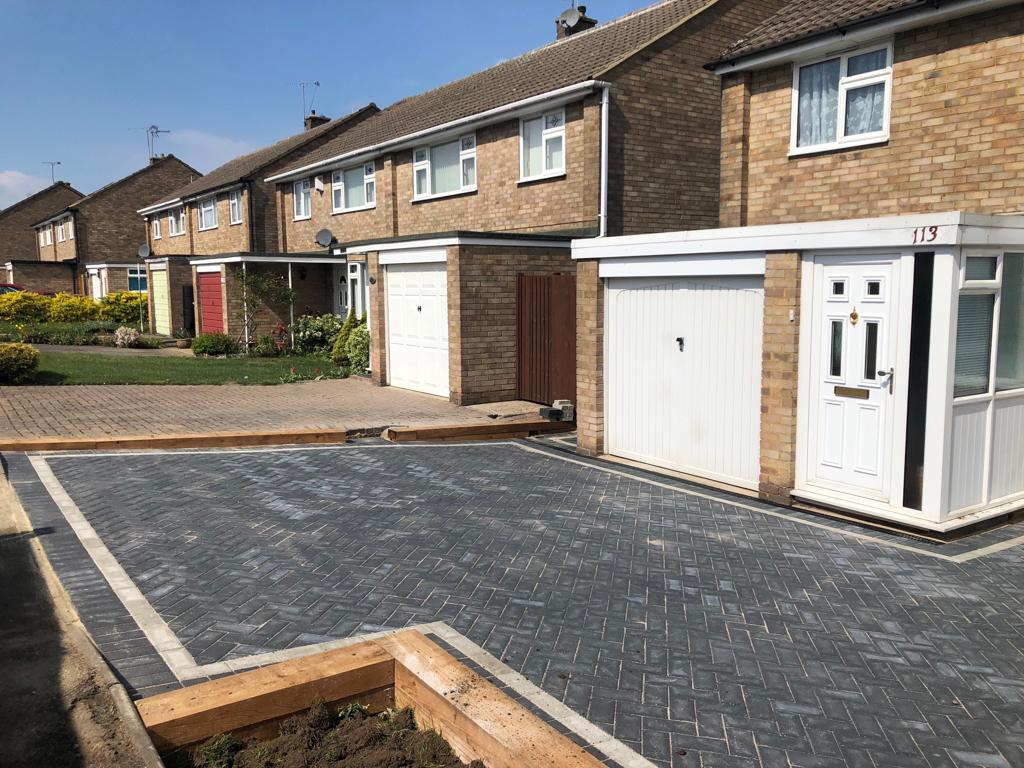

Block paving driveways require regular re-sanding to maintain their structural integrity and appearance. The jointing sand between pavers prevents movement, reduces weed growth, and keeps water from undermining the foundation.
Wet climate gradually washes away jointing sand, particularly during heavy rainfall periods. This leaves gaps that weaken the entire surface and create opportunities for weeds to establish themselves. When professional maintenance becomes essential, addressing these issues promptly prevents costly replacements.
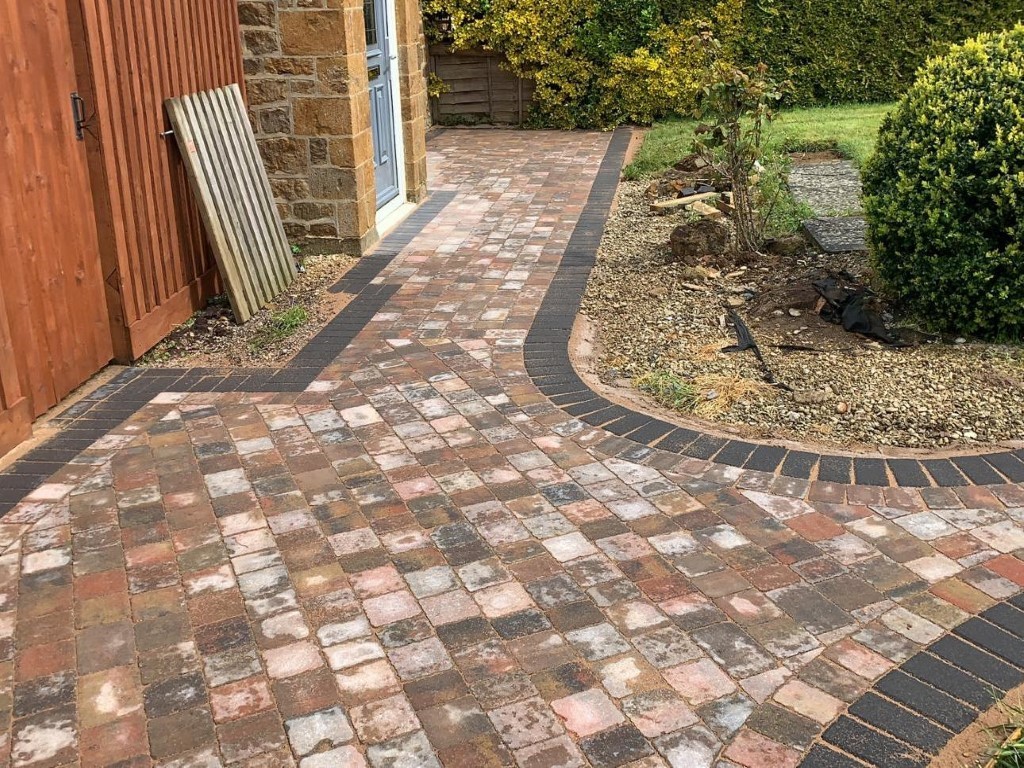
When to Re-sand Block Paving
Inspect your driveway quarterly for signs that re-sanding is needed. Look for gaps wider than 3mm between blocks, loose or wobbly pavers, or weeds growing through the joints.
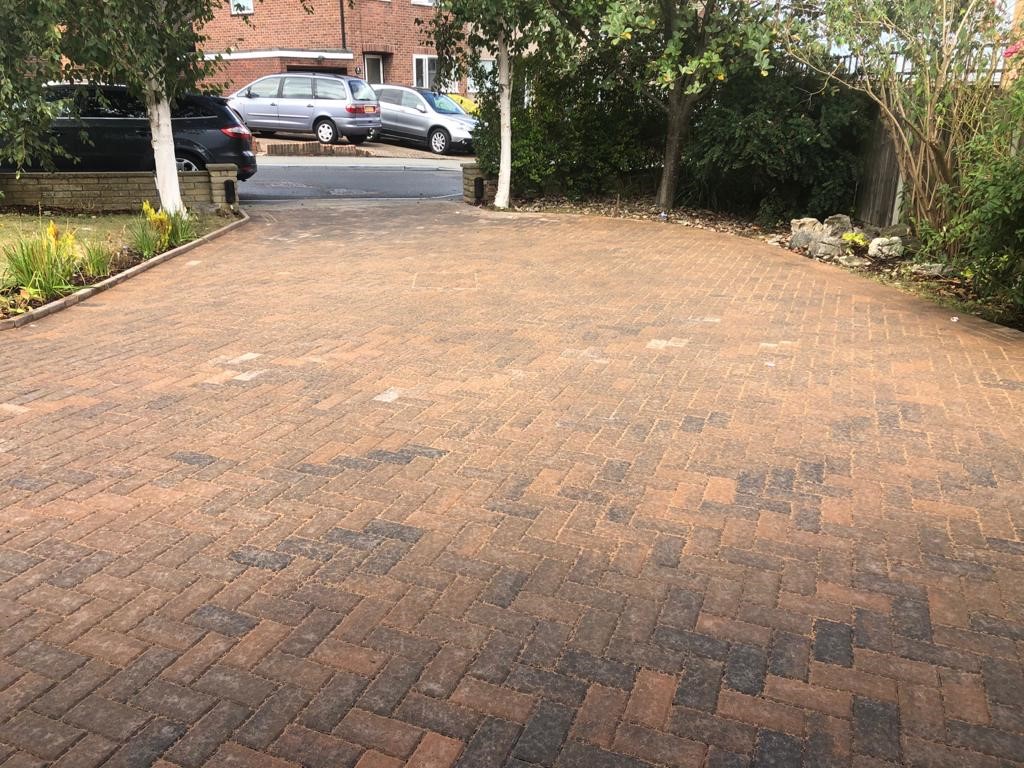
- Visible gaps between blocks
- Pavers that rock when stepped on
- Sand washing away during rain
- Increased weed growth in joints
- Uneven surface areas
Choosing the Right Sand
Kiln dried sand is essential for block paving joints. This fine, angular sand locks together when compacted and resists washing out better than builder’s sand or sharp sand.
Polymeric jointing sand offers enhanced performance in wet conditions. It contains binding agents that activate with water, creating a more stable joint that resists erosion and weed growth.
Re-sanding Process
Clean the driveway thoroughly before applying new sand. Remove all debris, weeds, and loose material from the joints using a stiff brush or pressure washer.
- Sweep kiln dried sand across the surface
- Work sand into joints using a soft brush
- Compact with a plate compactor or hand tamper
- Add more sand and repeat until joints are full
- Sweep away excess sand from paver surfaces
Water lightly if using polymeric sand, following manufacturer instructions. Avoid over-watering as this can weaken the binding properties and cause sand to wash away.