
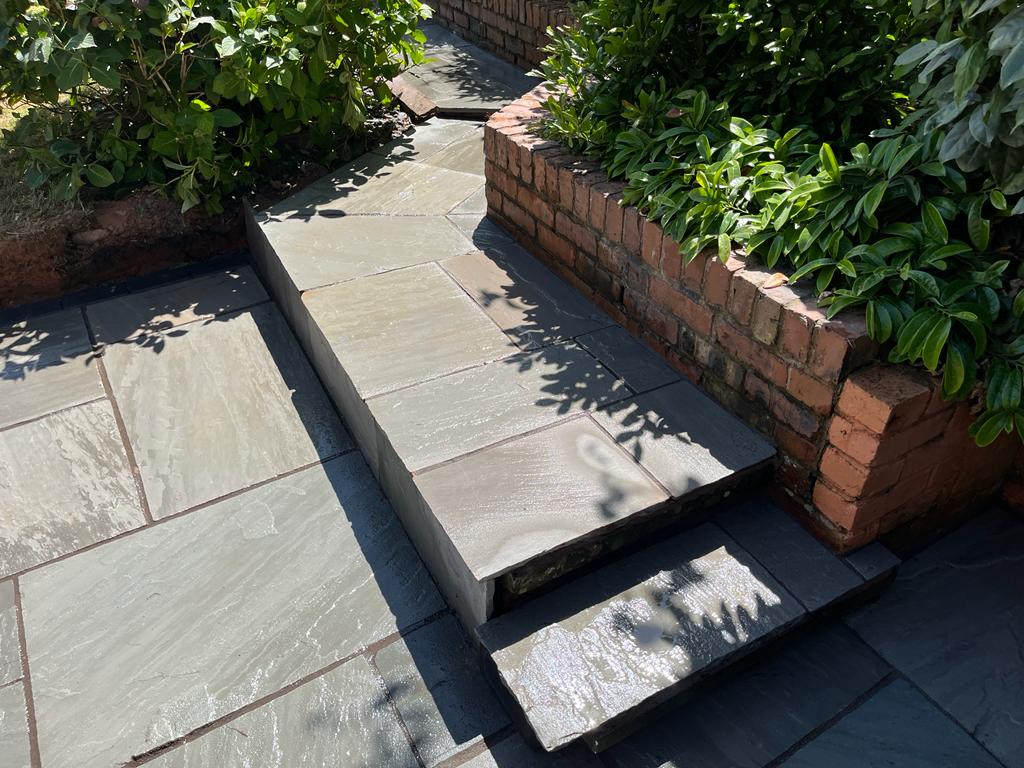

Shaded areas create unique challenges for natural stone paving. Poor drainage, moss growth, and algae formation are common problems in Rochdale’s wet climate.
Before choosing stone for damp, shaded areas, consider drainage solutions. Without proper water management, even the best stone will develop issues.
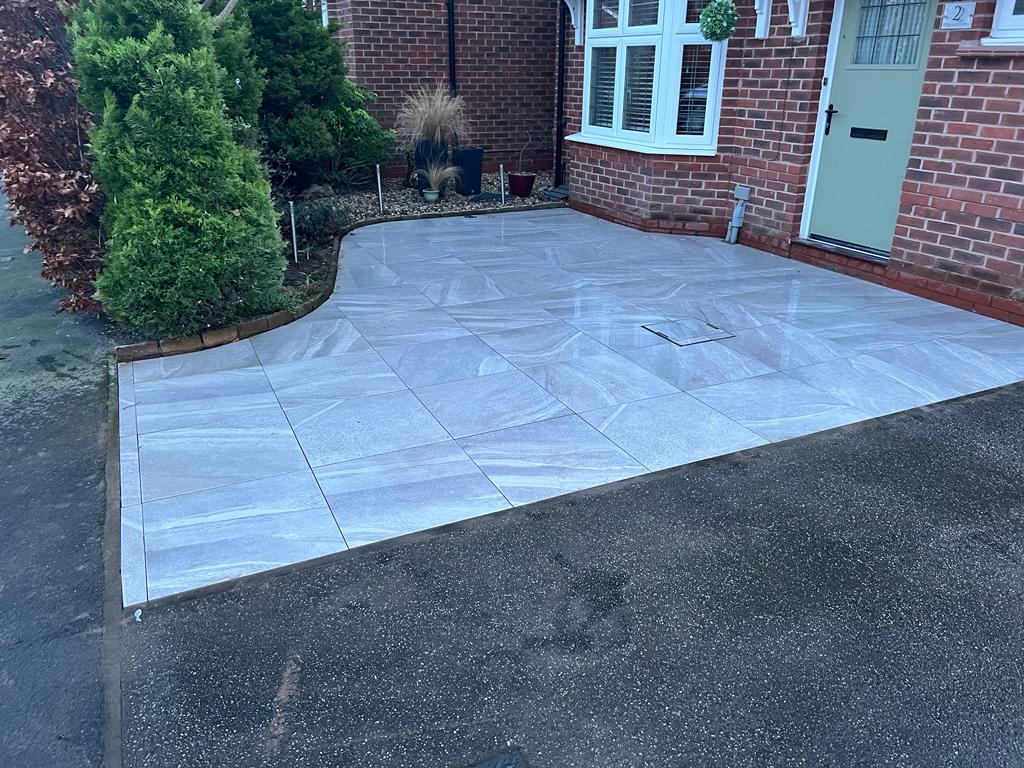
Best Stone Types for Shaded Areas
- Granite: naturally resistant to moisture absorption
- Slate: non-porous surface prevents moss buildup
- Dense limestone: harder varieties cope better with damp conditions
- Avoid soft sandstone: absorbs water and deteriorates quickly
Essential Preparation Steps
Proper groundwork forms the foundation of any successful natural stone paving project. Comprehensive site preparation services ensure optimal drainage and long-lasting results for your investment.
Install adequate drainage before laying stone. French drains or permeable sub-base materials prevent water pooling underneath paving.
Create slight gradients away from buildings. Even small slopes help water flow rather than settle on stone surfaces.
Surface Treatments and Maintenance
Apply anti-slip treatments to prevent accidents on wet stone. Regular cleaning removes organic matter that feeds moss and algae growth. For those considering different paving options, brushed concrete surfaces can offer better slip resistance than smooth finishes in wet conditions.
Questions for Your Contractor
- What drainage improvements do you recommend for this specific area?
- Which stone types perform best in our local climate conditions?
- How will you create proper falls for water runoff?
- What ongoing maintenance will be required?